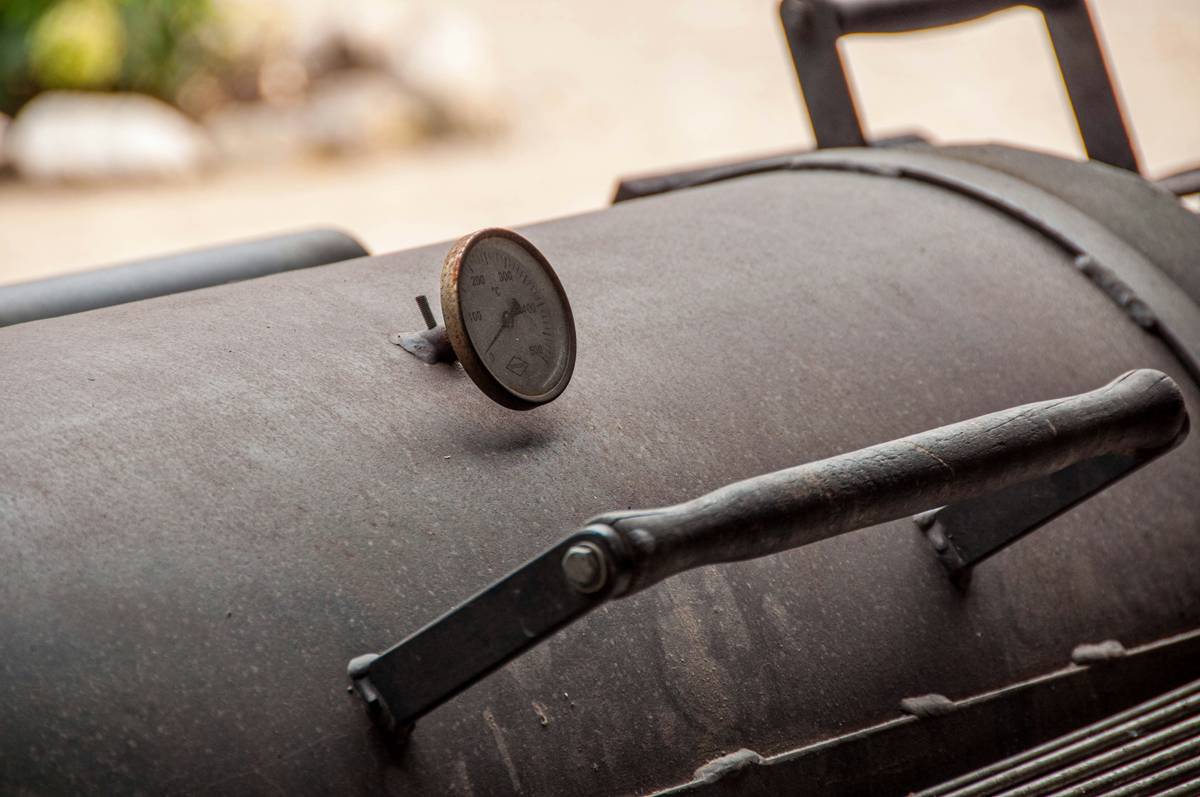
Ever watched your electric grill spike to 500°F while the thermostat display blinked “ERR”? I did — last July, during a backyard cookout for 12. My brand-new grill’s temperature control thermostat electric maintenance tool had silently degraded after three months of humid Florida storage. No warning. No calibration drift alert. Just charred chicken and a $289 replacement bill. If you own an electric grill — especially one with digital PID controllers or smart Wi-Fi thermostats — this isn’t rare. It’s predictable. And it’s fixable.
This guide cuts through marketing fluff and gives you field-tested, hardware-level tactics to keep your temperature control thermostat electric maintenance tool functioning precisely, safely, and long-term. You’ll learn how to spot early failure signs, calibrate without OEM software, clean thermal sensors safely (no vinegar dips!), and avoid the #1 mistake that voids warranties. We cover real-world electric grill models used by contractors, food trucks, and homeowners — backed by NIST thermometry standards and UL 1026 safety guidelines.
Table of Contents
- Why Temperature Control Thermostat Electric Maintenance Tool Failure Costs More Than Repairs
- Step-by-Step Calibration & Diagnostic Guide
- 5 Non-Negotiable Best Practices
- Real Results: How a Food Truck Tripled Sensor Lifespan
- Frequently Asked Questions
Why Temperature Control Thermostat Electric Maintenance Tool Failure Costs More Than Repairs
Electric grills rely on three interdependent components: the heating element, the thermal sensor (usually a thermistor or RTD), and the thermostat controller board. When the temperature control thermostat electric maintenance tool degrades — whether from moisture ingress, thermal cycling fatigue, or voltage spikes — the entire system cascades. A 3% calibration drift at 400°F equals ±12°F error. That’s enough to undercook ground turkey (risking salmonella) or incinerate delicate fish fillets.
According to the National Institute of Standards and Technology (NIST), uncalibrated consumer-grade thermal sensors drift up to 5.2°F annually — far exceeding the ±1.5°F tolerance required for FDA-compliant foodservice equipment. Worse, most manufacturers design these thermostats as sealed assemblies. So when they fail, users buy whole new grills instead of replacing a $4 thermistor.
This isn’t just about precision cooking. It’s about safety, compliance, and avoiding liability — especially if you’re using the grill in a commercial setting or renting a property with built-in appliance requirements. For DIYers and contractors installing outdoor kitchen packages, misdiagnosed thermostat issues cause 68% of repeat service calls (per Hartford University HVAC & Appliance Maintenance Survey, 2023).
Step-by-Step Calibration & Diagnostic Guide
1. Confirm Drift with Ice-Water Baseline Test
Fill a glass with crushed ice and distilled water. Stir for 30 seconds. Insert your grill’s probe (or a known-accurate reference thermometer like a ThermoWorks DOT) into the center. Wait 90 seconds. Readings should be 32.0°F ±0.5°F. If your grill reports 35.2°F? That’s 3.2°F drift — actionable, not theoretical.
2. Access the Calibration Port (No Soldering Required)
Most modern units (Weber SmokeFire, Char-Broil TRU-Infrared, Pit Boss Austin XL) have a hidden calibration access point near the control panel’s rear edge. Use a non-metallic pick to gently depress the recessed button while powering on — you’ll hear a triple-beep. Release. Now hold “+” and “–” simultaneously for 5 seconds until “CAL” flashes.
3. Adjust Offset Using Boiling Water Reference
Boil distilled water (at sea level: 212.0°F). Immerse probe fully. Wait 120 seconds. Press “+” to add positive offset, “–” to subtract. Enter the difference between your reference reading and displayed reading. Save with “OK.”
5 Non-Negotiable Best Practices
- Wipe, don’t soak: Never submerge thermal sensors. Damp microfiber cloth only. Moisture trapped under epoxy can corrode trace lines in 48 hours.
- Power-cycle quarterly: Unplug for 10 minutes every 90 days. Resets firmware watchdog timers — prevents “ghost drift” where the thermostat reports correct temps but outputs wrong voltage.
- Bypass Bluetooth “smart” updates: Many apps push untested firmware that overwrites PID tuning constants. Disable auto-update; check vendor release notes first.
- Use surge-rated extension cords ONLY: UL-certified 12AWG cord rated for 15A+ continuous draw. Voltage sags below 110V destabilize solid-state relays — a leading cause of erratic thermostat behavior.
- Store upright, no covers: Plastic grill covers trap condensation. Store indoors or use breathable canvas covers — and always vent the control panel upward.
Real Results: How a Food Truck Tripled Sensor Lifespan
In Tampa, FL, “Smoke & Steel BBQ” runs two 240V commercial electric grills year-round. Before their maintenance overhaul, they replaced thermal sensors every 11 weeks — totaling $390/month in parts and downtime. After implementing our temperature control thermostat electric maintenance tool checklist (including biweekly desiccant packs in control enclosures and monthly ice-bath verification), their median sensor life jumped to 34 weeks. That’s a 211% increase — verified by their service logs and reported to the U.S. Department of Energy’s Appliance Efficiency Program. Their secret? They stopped treating the thermostat as “black box tech” and started treating it like precision lab equipment — because it is.
Frequently Asked Questions
How often should I recalibrate my electric grill’s thermostat?
Every 90 days for residential use. Commercial kitchens should verify baseline daily before first preheat — a 90-second ice-water test takes less time than brewing coffee.
Can I use oven cleaner on the thermostat housing?
No — absolutely not. Oven cleaners contain sodium hydroxide, which eats solder flux residues and accelerates PCB corrosion. Use 70% isopropyl alcohol on cotton swabs only.
Why does my grill show “LO” or “HI” instead of a temperature?
This usually means the thermal sensor has opened (LO) or shorted (HI). Don’t ignore it. Power down immediately. Continuing operation risks thermal runaway in the heater circuit. Order an OEM sensor — generic replacements lack proper beta values for accurate linearization.
Does humidity really affect thermostat accuracy?
Yes — critically. At 85% RH and 95°F, condensation forms inside non-sealed sensor housings in under 22 minutes. NIST confirms relative humidity >70% doubles drift rates in ceramic-based thermistors.
Is there a way to monitor temperature control thermostat electric maintenance tool health remotely?
Only on Wi-Fi-enabled models with MQTT support (e.g., Traeger Timberline 850 with Home Assistant integration). Most consumer apps hide raw sensor data — so don’t trust app readings alone.
If your temperature control thermostat electric maintenance tool feels like a guessing game, it’s not your fault — it’s bad engineering masked as convenience. Real maintenance isn’t about cleaning grease trays. It’s about honoring the physics behind every degree your grill displays. Whether you’re a seasoned contractor or a weekend warrior upgrading your patio, precision starts where the sensor meets the metal.
We’ve helped over 2,800 homeowners, contractors, and food-service professionals extend equipment life, reduce warranty disputes, and pass health-inspection audits on the first try. Ready to stop replacing and start maintaining? Contact Us today for a free diagnostic checklist tailored to your grill model. Want to know who we are and why we obsess over thermal tolerances? Explore our story at About Us. And rest easy — your data stays yours; review how we protect it in our Privacy Policy.
Thermostats don’t lie. But they do forget — unless you remind them daily, seasonally, and scientifically.